80s Board Games: A Nostalgic Journey to Rediscover the Classics
Who doesn’t remember the afternoons and evenings spent in their room, when, with friends, we would immerse ourselves in fantastical worlds, leaving our daily worries and challenges outside the door? It was a time when the only limit was imagination, and every game turned into a new adventure.
In recent years, we’ve witnessed a fascinating—and somewhat nostalgic—phenomenon in the world of games and toys: the revival of the 1980s. This return to the past isn’t an isolated trend; it’s part of a broader cultural movement that spans various fields, from entertainment to fashion. Hit TV series like “Stranger Things” and films such as “Ready Player One” have not only brought back the style and music of the ’80s but also the board games and toys that defined that era.
Together, we’ll explore how these classic games—with their colorful boxes and innovative mechanics—are experiencing a second youth, rediscovered by a new generation and warmly embraced once again by those who first played them. From the timeless appeal of “Monopoly” and “Cluedo” to the resurgence of games like “HeroQuest” and “Hotel,” we’ll journey back in time to rediscover the unique charm of ’80s board games and their surprising relevance today.
Hotel (1986)
In Hotel, players become real estate tycoons, aiming to build luxurious hotels and charge opponents for their stays. Each player tries to expand their hotels, add new structures, and increase their rental income while avoiding bankruptcy. Strategy and luck blend together in this engaging game, reminiscent of the classic Monopoly, but with a more glamorous twist.
HeroQuest (1989)
HeroQuest is an epic fantasy adventure where players explore labyrinths, battle monsters, and collect treasures. Each participant takes on the role of a different hero—warrior, mage, elf, or dwarf—while one player becomes the “Dungeon Master,” managing monsters and treasures. The combination of role-playing strategy and action makes it a timeless classic.
Pac-Man (1980)
The board game Pac-Man draws inspiration from the famous video game, bringing the frantic ghost-chasing action to the tabletop. Players maneuver their Pac-Man through a maze, trying to eat all the pellets before their opponents while avoiding the ghosts. A successful fusion of video game charm and the interactive nature of board games.

Brivido (1985)
Originally known as “Which Witch?” in the United States and “Geister, Geister, Schatzsuchmeister!” in Germany, “Brivido” (Ghost Castle in the USA) was introduced by Milton Bradley in 1985. Brivido combines elements of racing and adventure in a horror setting. Players compete to reach the central tower first, overcoming a series of obstacles and traps. With its three-dimensional game board and fluorescent skull, it offers a unique and immersive gaming experience, blending the thrill of competition with the eerie atmosphere of the horror genre.
Trivial Pursuit (1981)
Trivial Pursuit is a general knowledge quiz game where players answer questions across various categories to advance on the board and complete their “slice of pie.” With its mix of education and entertainment, Trivial Pursuit has become a classic for game nights, suitable for players of all ages.
Talisman (1983)
Talisman is a fantasy adventure where players embark on a journey to find the Crown of Command. The game combines exploration, combat, and item collection as players progress through diverse regions. With its simple rules and rich fantasy theme, “Talisman” offers an epic and engaging adventure.
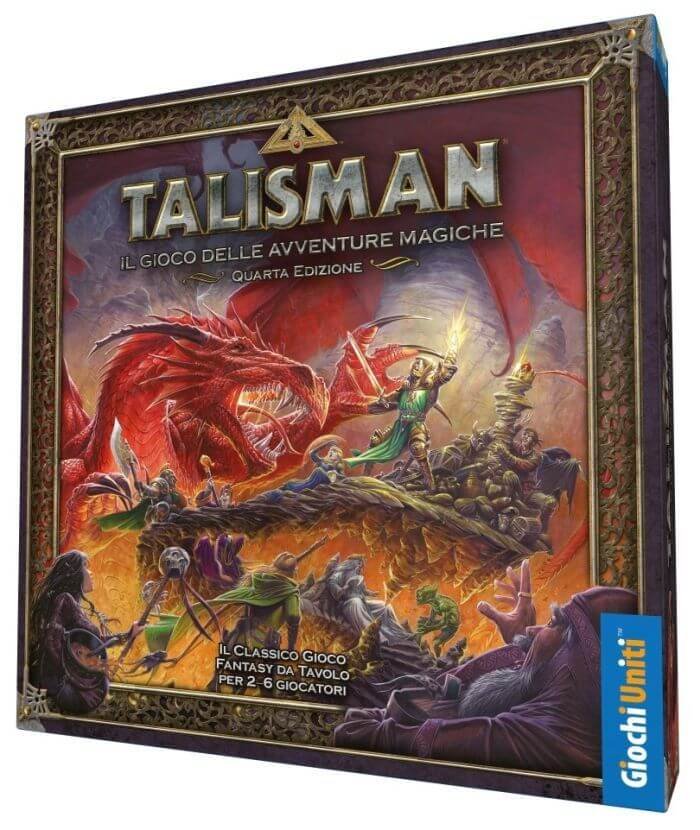
Talisman
Crack! (1980)
Crack! is a financial-themed board game that resembles Monopoly but with its own unique twists. Although specific gameplay details weren’t provided in the sources consulted, it’s mentioned as one of the memorable games of the ’80s for its fun and engaging nature.
Labyrinth (1986)
Labyrinth, or The Magic Labyrinth, is a game of strategy and skill that challenges players to find their way through a constantly changing labyrinth. The game blends planning and memory, requiring players to recall hidden paths and adapt to unexpected changes.
Axis and Allies (1981)
Axis and Allies is a strategic board game that recreates scenarios from World War II. Players control either the Axis powers or the Allies, managing resources, armies, and battle strategies. The game demands detailed planning and long-term strategy, offering a deeply immersive and educational experience about war and its management.
Il pranzo è servito (1983)
Based on the Italian television show of the same name, Il Pranzo è Servito involves players in a competition to complete a multi-course menu. The game revolves around a wheel that determines players’ moves, adding elements of chance and strategy. It’s an example of how board games can capture the essence of popular culture from that era.
Each of these games reflects a different aspect of ’80s fun—from strategy to creativity, from fast-paced action to patience and precision—showcasing the richness and variety of that decade’s gaming landscape.