One: The Regulations – A Comprehensive Guide
The UNO card game is a timeless classic that entertains both young and old. Known for its simple yet exciting rules, UNO offers hours of fun and engaging challenges. In this article, we’ll explore in detail how to play UNO, delving into the basic rules and special variants like UNO Extreme, UNO Flip!, and those dedicated to popular franchises such as UNO Harry Potter and UNO Minecraft.
1. The Basic Rules of UNO
DID YOU KNOW?
UNO was created in 1971 by Merle Robbins, a barber from Ohio, who wanted to settle a dispute with his son over the rules of another card game. With the help of his family, Robbins designed and produced the first UNO decks. After selling the rights to UNO to Robert Tezak, a funeral home owner and avid player, UNO’s journey began. Tezak founded International Games Inc. to market UNO, which was later acquired by Mattel in 1992. Since then, UNO has achieved worldwide fame, with over 150 million copies sold across 80 countries.
UNO is played with a deck of 108 cards, divided into four colors: red, yellow, green, and blue. Each color includes numbered cards from 0 to 9 and special action cards.

Specifically, a UNO card deck contains:
- 25 cards divided into four colors (green, red, blue, and yellow), namely
- 19 numbered cards (1 zero and 2 of each number up to 9)
- 2 “Reverse” cards
- 2 “Skip” cards
- 2 “Draw Two” cards
- 4 “Wild Draw Four” cards
- 4 “Wild” cards
The goal of the game is to be the first to get rid of all the cards in your hand, following the rules of UNO.
Game Start
To begin, each player receives 7 cards. The remaining card from the deck is placed in the center and serves as the starting point for discarding. The player to the left of the dealer starts the game.
Game Turn
During their turn, a player must play a card that matches the color, number, or symbol of the top card on the discard pile. If they don’t have any playable cards, they must draw from the deck until they find a playable card.
Special Cards
UNO’s action cards add an element of surprise and strategy to the game:
“Reverse” Card
The “Reverse” card changes the direction of play—for example, from clockwise to counterclockwise. It’s a strategic card that can be used to prevent an opponent from winning by altering the order of play in your favor.

“Skip” Card
This card skips the next player’s turn. It’s useful for slowing down opponents, especially if they’re close to winning.
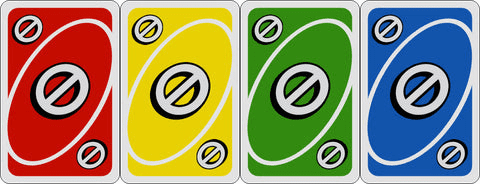
“Draw Two” Card
When you play a “Draw Two” card, you force the next player to draw two cards and skip their turn. This can be an effective way to prevent an opponent from getting rid of their cards.

“Wild” Card
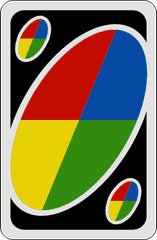
The “Wild” card features all four colors and allows the player to choose the color to continue playing with. After playing a Wild card, you must loudly announce the color you’ve chosen. You can also choose the same color as the current top card—especially if you’re trying to get rid of your Wild card. If you have many cards of a specific color, the Wild card can help you eliminate them.
“Wild Draw Four” Card
This card functions like a standard Wild card, but with an added effect: the next player must draw four cards from the deck and skip their turn. However, there’s a specific condition for playing this card: you can only use it when you don’t have a card in your hand that matches the color of the top card on the discard pile.
If the next player suspects that you’ve played this card illegally, they can challenge you. In this case, you must show your hand to the player who challenged you. If the challenge is correct and you played the card illegally, you must draw four cards. If the challenge is incorrect, the player who challenged you must draw four cards plus two additional cards.
These details about the special cards show how UNO is a game that combines simplicity and strategy, with elements that can quickly turn the tide of a match. Using these cards strategically can be the key to victory in this fun and dynamic card game.

Game End
When a player plays their second-to-last card, they must shout “UNO!” to signal that they have only one card left. The game ends when a player runs out of cards.
2. Winning at UNO
To win at UNO, it’s essential to be strategic and attentive. When you have only one card left in your hand, you must shout “UNO” before the turn passes to the next player. If you don’t do it in time and another player notices, you’ll have to draw four cards from the deck. However, if no player notices before the next turn, you won’t be penalized with extra cards.
The game ends when a player manages to lay down the last card in their hand, thus winning the round. At this point, the scoring begins:
- Numbered cards are worth their numerical value.
- Special action cards like “Draw Two,” “Reverse,” and “Skip” are worth 20 points each.
- “Wild” cards and “Wild Draw Four” cards are worth 50 points each.
The winner of the round earns points based on the value of the cards remaining in the other players’ hands. The game can be played until a player reaches a total score of 500 points, or you can decide to play a series of rounds and declare the winner as the player with the fewest accumulated points once 500 points are reached.
Remember that in UNO, beyond luck, strategy and paying attention to your opponents’ moves are essential for victory!
3. Variants to the Classic Rules
Beyond the official rules of UNO, there are various “house rules” that many players love to introduce to make the game more dynamic and personalized.
Stacking Rule In 2019, a surprising rule spread among UNO players on Twitter—the stacking rule. Although not included in the official rules, this rule is very popular in home games. It allows players to avoid drawing extra cards by passing the duty to the next player, provided that the next player cannot play a +2 or +4 card themselves.
Seven-0 Rule This rule introduces an interesting twist. Whenever a 7 is played, the player has the opportunity to swap their cards with another player’s cards. Conversely, when a 0 is played, all players must pass their entire deck of cards to the next player, following the established order of play.
Jump-in Rule If a player holds a card identical in color and number to the top card on the discard pile, they can play it immediately—even outside of their turn. This interrupts the normal flow of the game and allows play to continue as if it were the turn of the player who made the jump-in.
These additional rules offer a touch of variety and challenge, allowing players to experience a more personalized—and often more strategic—UNO game.
4. Special Editions of UNO
UNO’s variants add unique levels of fun and challenge to the classic game.
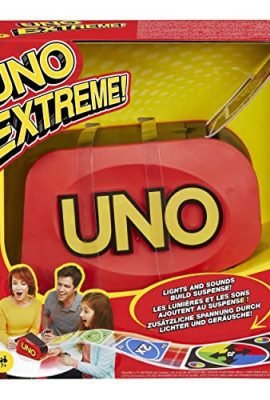
UNO Extreme This variant introduces an unpredictable element: a card launcher that, when activated in certain situations, randomly fires cards. This feature adds a dose of adrenaline and surprise, making every game a unique experience.
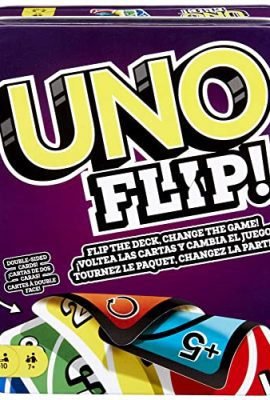
UNO Flip! UNO Flip! adds a new dimension with a double-sided card deck. The game is played on two sides: light and dark, each with its own set of rules and action cards. When you play a “Flip” card, you switch between sides, dramatically changing the dynamics of the game.
UNO All Wild! The “All Wild!” variant is a special edition where all cards have functions similar to those of Wild cards in the standard game. This means that every card played can change the color in play or have other special effects, making every turn unpredictable and strategic.
The variety of UNO’s special editions is further enriched with themed versions that draw on the imagery of some of the most popular franchises.
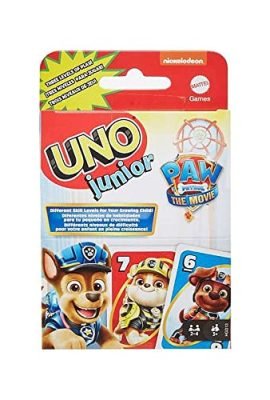
UNO Junior In the Junior version, the cards are characterized by bright colors and friendly designs, often featuring animals or characters that capture children’s attention. The rules are simpler than in classic UNO, with fewer action cards, making the game easier for young children to follow. This helps kids develop skills like recognizing colors and numbers, while also introducing them to concepts of strategy and turn-based play.
UNO Minecraft This version is a fusion between the world of UNO and that of Minecraft. The cards feature images and themes inspired by the popular video game, offering an engaging gaming experience for Minecraft fans.
UNO Harry Potter In this edition, the magical atmosphere of Hogwarts merges with the rules of UNO. The cards are themed with characters and elements from the famous series, featuring special cards that reflect spells and magical objects. This version appeals to both UNO enthusiasts and Harry Potter fans.
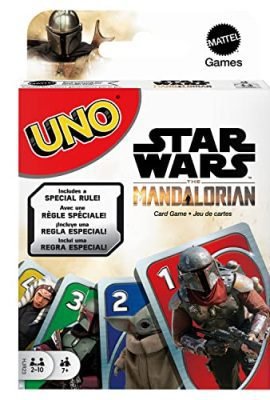
UNO Super Mario In this edition, the cards are decorated with iconic characters from the Super Mario universe, such as Mario, Luigi, Princess Peach, Yoshi, and others. Beyond the unique design, UNO Super Mario may include special rules or action cards that reflect elements of the video game. This variant offers a familiar yet refreshed gaming experience, appealing to both UNO fans and Super Mario enthusiasts.
Each of these variants brings with it a unique way to experience the classic UNO game, adding rules and themes that can renew interest and increase fun for players of all ages.
5. Video Tutorial “How to Play UNO?”
For those who prefer a visual approach to learning UNO’s rules, the YouTube channel of Board Games Francesco offers an excellent video tutorial in Italian. This video focuses on the classic version of UNO, providing a detailed and accessible guide for beginners and experienced players alike.
The video covers all the essential aspects of the game, from initial setup to game strategy. It clearly explains the rules related to different cards, including action cards like “Change Turn,” “Skip Turn,” “Draw Two,” “Wild,” and “Wild Draw Four.” Additionally, the tutorial addresses common game situations, offering practical tips on how to manage various card combinations and strategies for winning.
6. Frequently Asked Questions
How many cards do you draw if you don’t say “UNO”?
If you don’t say “UNO” when you’re left with just one card in your hand, you must draw four cards. This rule helps maintain focus during the game and adds an element of surprise and speed.
Do you have to draw a card every time in UNO?
If you have a playable card, you don’t need to draw from the deck. If you can’t play any cards, then you must draw from the draw pile. Furthermore, you might be forced to draw more cards if an opponent plays a “Draw Two” or “Draw Four” card against you.
Can you end the game with a Wild card?
Yes, it’s possible to end the game with an action card. If you play an action card as your final move, the next player must draw 2 or 4 cards (depending on the card played), and these cards are added to their total score.
Can you keep a Wild card in UNO?
Yes, UNO’s rules allow you to hold onto a Wild card. Even if you have a card that could be played, you can choose to draw from the deck instead.
Can you play two identical cards at the same time in UNO?
According to the official UNO rules, it’s not permitted to play two identical cards simultaneously (known as “stacking”). However, you can introduce this rule into your personal house rules. In the “Double” variant, players can play two identical cards together—for example, a pair of red 4s can be played if the top card on the discard pile is red or is a 4.
UNO is a game suitable for all ages, stimulating strategy and fun with family or friends. Whether it’s the classic version or one of the exciting variants like UNO Extreme, UNO Harry Potter, UNO Flip, or UNO Minecraft, there are always new challenges and moments of joy. Learning the rules of UNO and its variants ensures hours of fun and laughter.
Showing 1–15 of 18 results