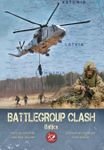
Battlegroup Clash: Baltics – A Professional Wargame for a Commercial Audience
As global tensions rise, both digital and analog games are increasingly utilized by professionals to understand, model, and prepare for complex geopolitical scenarios. The realm of professional wargaming is gaining significant attention.
The concept behind Battlegroup Clash: Baltics, a transformation of the Battlegroup Wargame System (BGWS), was initiated by the British Army to foster a wargaming mindset within military ranks. The original BGWS focused on tactical-level combat but lacked elements that precede real-life engagements, such as mission planning, force capacity, tasking within specific timelines, and geographic considerations. Recognizing this gap, the author sought to adapt BGWS into a game appealing to a broader commercial audience.
Key Features
- Real-World Grid-Based Maps: Unlike typical tactical wargames, Battlegroup Clash: Baltics uses grid-based maps based on real-world satellite imagery, ensuring authenticity in gameplay.
- Operational Planning: Players are required to plan operations prior to gameplay, reflecting real military strategies and enhancing the depth of the game.
- Streamlined Gameplay: The game’s design eliminates the need for an umpire and simplifies complex military concepts, making it accessible to a wider audience.
- Unit Information on Counters: All necessary unit statistics are printed directly on the game counters, allowing for easier gameplay and improved visibility during matches.
- Narrative Focus: The game adopts a contemporary storyline, featuring NATO forces opposing a hypothetical Russian invasion of Estonia, which provides a relevant context for the gameplay.
- Advanced Warfare Mechanics: The game integrates modern warfare elements, such as drones and electronic warfare, emphasizing their significant impact on contemporary battlefields.
- Electronic Warfare Chits: Players can utilize chits to jam enemy reconnaissance drones or intercept communications, reflecting the strategic importance of electronic warfare.
- Drones in Gameplay: The introduction of reconnaissance and kamikaze drones changes tactical options, providing unique advantages to players and transforming battlefield dynamics.
Conclusion
The development of Battlegroup Clash: Baltics involved extensive playtesting, combining insights from both professional and commercial wargaming enthusiasts. By prioritizing physical prototypes over digital simulations, the author ensured a robust and engaging game experience.
Produced in the Czech Republic to align with ethical considerations, the game was self-published, allowing for quick market entry without the need for traditional crowdfunding. The initial response has been overwhelmingly positive, with hundreds of pre-orders received shortly after launch. As the game becomes widely available, it will be interesting to see if it resonates with its target audience, fulfilling the promise of a professional wargame tailored for a commercial market.
Via BoardGameGeek Blog