Designer Diary: High Moon
by Antonio Guillamó
The journey of High Moon began with a creative challenge—a contest that required the design of a game using 20 cards or fewer. The concept originally revolved around the Legend of Zelda: Ocarina of Time medallions, forming a game called “Medallones.” Players would aim to create the largest group of medallions of their chosen color by stealing cards from a pile. Despite its simplicity, the game did not progress beyond the first round of the contest and was set aside for almost a year.
Reviving “Medallones”
As the “Protos y Miguelitos” event approached in August 2024, the author decided to revisit “Medallones” among other prototypes. With minimal adjustments needed for testing, hopes were cautiously optimistic. The game was presented to industry professionals Kortes from Combo Games and designer Toni López, who provided valuable feedback. Their suggestions included introducing a card market, incremental costs for placing tokens, and an innovative idea of power plants that provided energy to the roads players built, connecting to their medallions.
Inspired by this feedback, the author reworked the prototype, integrating power plant cards and an action-based market system, transforming “Medallones” into a more intricate game.
Development at the Córdoba Festival
After further refinements at the Córdoba festival in October 2024, the game evolved significantly. The introduction of a player card deck replaced the card market, streamlining gameplay and enhancing tactical elements. Players had the same type of cards, varying only in the order they appeared, which added strategic depth. Additionally, a scoring system catered to diverse play styles.
Collaboration with Combo Games
Following a partnership with Combo Games, the game underwent another thematic shift. The original concept was reinvented to center around the Far West, connecting ranches to towns using cow caravans, and renamed “Deadstock.” However, after several months of development, the mechanics were refined to include a track system for earning victory points, alongside a token economy that introduced new strategic challenges.
From “Deadstock” to “High Moon”
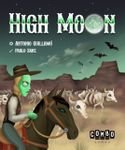
While playtesting “Deadstock,” feedback indicated that the theme lacked originality. Influenced by the artistic styles of the video game Grim Fandango and Tim Burton’s works, Pablo Sanz proposed a “Weird West” theme involving skeletal cows and spectral liquors. This new direction not only enriched the narrative but also provided a unique aesthetic, culminating in the title High Moon.
Final Testing and Release
Extensive testing continued from August to December 2025, focusing on refining the scoring system and balancing gameplay elements. As a result, High Moon emerged as an engaging game that can be explained in five minutes and played in 30 to 60 minutes, offering players a wealth of strategic decisions with minimal components.
Conclusion
With its blend of strategy, interaction, and unique thematic elements, High Moon promises a captivating experience. Players will engage in thoughtful decision-making as they navigate the placement of cards and tokens, while also balancing potential rewards for themselves and their opponents. The game aims to create a dynamic and enjoyable environment, ensuring that every turn is rewarding and strategic. As players delve into the world of High Moon, they are invited to explore the depths of Death Valley and enjoy the intricate gameplay it offers.
Via BoardGameGeek Blog